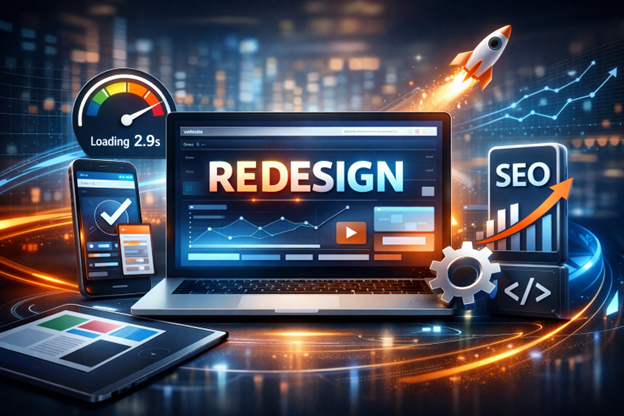
In the rapidly evolving digital landscape, your website is not just a digital brochure—it is your most crucial sales tool, customer service portal, and brand ambassador. If it’s struggling to keep up, your business is struggling to grow.
While many business owners view a website redesign as a daunting expense, we view it as an essential investment in future profitability. By 2026, user expectations for speed, functionality, and aesthetic quality will be higher than ever. Staying stagnant is no longer an option; it’s a competitive liability.
Here at Webwhizz, we specialize in transforming outdated digital platforms into high-performing conversion machines. We understand the warning signs of a failing website, and we want to help you spot them before they seriously damage your bottom line.
If you’ve been ignoring that nagging feeling, it’s time to listen up.
The Cost of Digital Stagnation
Before diving into the seven signs, it’s important to understand the high stakes. A slow, non-responsive, or ugly website doesn’t just frustrate users; it directly impacts your revenue. Google penalizes slow sites, mobile users leave immediately, and outdated aesthetics erode trust faster than you can say “buy now.”
A proactive redesign prepares you for success over the next five years, ensuring you meet modern SEO standards, capture mobile traffic, and deliver a user experience that converts visitors into loyal customers.
The 7 Undeniable Signs It’s Time for a Redesign
These signs often manifest subtly in analytics before turning into major issues. Pay close attention to these indicators if you want your business to thrive in 2026 and beyond.
1. Your Load Speeds Are Driving Customers Away (The 3-Second Rule)
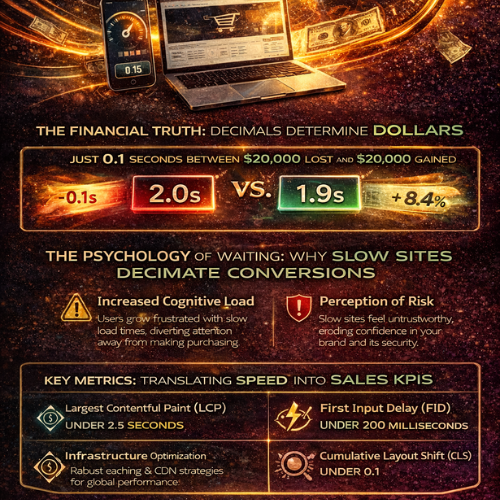
In the age of instant gratification, waiting even a few extra seconds for a page to load is unacceptable. Google has repeatedly stated that speed is critical for ranking and user experience (UX).
If your pages are stuffed with unoptimized images, bloated code, or relying on outdated hosting, your performance suffers drastically.
Red Flags Signaling Performance Failure:
- Poor Core Web Vitals Scores: Tools like Google PageSpeed Insights report low scores (often in the red) on metrics like Largest Contentful Paint (LCP) and First Input Delay (FID). These metrics directly impact SEO ranking.
- Time to Interactive is High: Your site might look loaded, but users can’t click on anything for several additional seconds.
- High Bounce Rate Correlates to Load Time: Analytics show a significant drop-off (high bounce rate) for visitors who spend more than three seconds waiting for the page to render.
2. Mobile Users Are Forced to Pinch and Zoom
This is perhaps the clearest indicator of an antiquated website design. Modern websites must be "responsive," meaning they automatically adjust their layout, navigation, and images to perfectly fit any screen size—from a 27-inch monitor to a small smartphone.
If your site requires visitors to awkwardly zoom in just to read text, navigate menus, or click a small button, you are actively losing mobile conversions.
Did You Know? Over 60% of all global website traffic now originates from mobile devices. If your mobile experience is subpar, you are ignoring the majority of your potential audience.
3. Your Aesthetics Feel Stuck in the Last Decade
Design trends evolve rapidly, and what looked sharp in 2018 now looks definitively dated. While aesthetics might seem secondary to functionality, they are crucial for building immediate trust and authority.
Visitors judge your company’s professionalism and relevance based on your design within seconds. A site featuring heavy drop shadows, clunky stock photos, overly busy layouts, or unusual font choices immediately signals that your business might also be behind the times.
A modern design embraces clean lines, ample white space, high-quality media, and intuitive visual hierarchies.
4. Your Site’s Navigation is Confusing and Overly Deep
When a visitor lands on your website, they should be able to find the answer to their core question or the product they seek within three clicks. If your navigation is disorganized, if important calls-to-action (CTAs) are hidden, or if the user journey is complicated, they will leave.
Conversion Blockers to Look Out For:
- Invisible CTAs: Are your "Contact Us" or "Request a Quote" buttons easy to see and clearly labeled? If they blend into the background, they aren't working.
- Too Many Menus: Confusing mega-menus that try to list everything at once overwhelm users.
- Internal Search Failure: If your internal search bar regularly returns irrelevant results, users quickly give up the search entirely.
5. Managing Content Has Become a Code Nightmare
If every simple task—like changing a headline, updating a photo, or adding a new blog post—requires you to dive into complex code or call a developer for minor fixes, your website platform is inefficient.
Modern Content Management Systems (CMS) are designed for ease of use. A redesign often includes migrating your site to a flexible, user-friendly platform (like WordPress or specialized headless CMS solutions) that empowers your internal team to manage content efficiently without relying on costly external support for daily updates.
6. You’re Embarrassed to Share Your Website URL
This sign is purely emotional, but perhaps the most telling. If you actively hesitate to put your website address on your business cards, marketing materials, or proposal documents, you already know there's a problem.
Your website should be a source of professional pride and a powerful conversion tool. If it’s currently a liability—something you feel obligated to apologize for—it is actively damaging your brand reputation and perceived authority in your industry.
7. It Relies on Deprecated or Unsupported Technology
Behind the design, the technology powering your site might be obsolete. Using outdated frameworks, ancient PHP versions, or reliance on discontinued plugins poses serious security and functionality risks.
These deprecated technologies are vulnerable to hacking and often conflict with modern browser standards. A redesign ensures your foundation is built on secure, scalable, and well-supported technology that can handle future growth and the ever-changing demands of the web.
Ready to Whizz Past the Competition?
Recognizing these seven signs is the first step toward reclaiming your digital presence. The next step is partnering with experts who can execute a seamless, results-driven redesign focused on measurable growth.
About Webwhizz
Here at Webwhizz, we don't just update your look; we engineer digital performance. Our team of designers, developers, and speed optimization specialists focus specifically on the issues that kill conversions: slow speeds, broken mobile layouts, and outdated user experience.
If your website is suffering from the symptoms listed above, the 2026 redesign window is now. We provide comprehensive services tailored to:
- Lightning-Fast Speed Optimization: We analyze Core Web Vitals and optimize the underlying code and assets to ensure sub-three-second load times.
- Flawless Responsive Design: Guaranteed seamless performance and visual appeal across every device.
- Modern, Conversion-Focused Aesthetics: Delivering clean, trustworthy, and intuitive designs that elevate your brand authority.
We pride ourselves on turning website liabilities into powerful assets.
Learn more about our approach and see how we can transform your digital presence by visiting our website: webwhizzservices
Don't Delay Your Digital Future
The website you have today dictates the success you can achieve tomorrow. Waiting another year to address glaring issues with speed, responsiveness, or design is effectively giving your competition a significant head start.
Don't let your business get caught in digital dust. If you identified with even three of the seven signs above, it’s time to stop mitigating risks and start maximizing opportunities.
Contact Webwhizz today. Let’s build a fast, beautiful, and functional website ready to tackle the demands of 2026 and beyond.