The internet is where modern business lives, yet few businesses consider the environmental cost of their digital presence. Every click, every image load, and every server request consumes energy—a surprising amount of energy.
At webwhizz, we believe that exceptional web design must also be responsible web design. We are dedicated to building digital experiences that not only perform flawlessly but also respect the planet. If you are committed to corporate social responsibility (CSR), optimizing your website for sustainability is the most powerful digital action your brand can take.
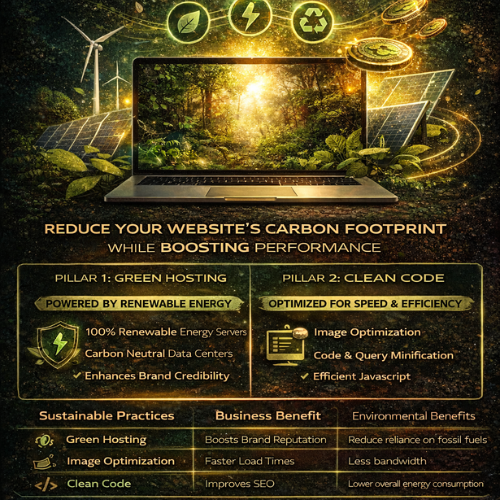
This guide explores the two critical pillars of eco-friendly web development: Green Hosting and Clean Code.
The Hidden Carbon Footprint of the Digital World
Before we dive into solutions, let’s address the scale of the problem.
The global network of data centers, transmission networks, and end-user devices currently uses more electricity than entire nations. Research estimates that the ICT sector is responsible for roughly 3.7% of global greenhouse gas emissions—a figure comparable to the entire aviation industry.
Why is this footprint so large?
- Always-On Servers: Data centers run 24/7, requiring massive amounts of energy for computing and, critically, for cooling.
- Data Transfer: Every byte of data transferred across the internet requires energy. Bloated websites require more data to download, placing higher strain on global networks.
- End-User Strain: Inefficient code forces user devices (laptops, phones) to work harder, draining batteries faster and consuming more household electricity.
For brands committed to sustainability, this digital pollution presents a significant blind spot. Fortunately, the solutions are accessible and highly beneficial for your bottom line.
Pillar 1: Choosing Green Hosting (The Infrastructure Solution)
The single greatest immediate impact you can make on your website’s footprint is ensuring the physical servers housing your data are powered sustainably. This is where Green Hosting comes in.
What is Green Hosting?
Traditional data centers rely heavily on fossil fuels. Green Hosting providers actively counteract this by committing to one of two practices (or both):
- Renewable Energy Sources: The provider physically purchases electricity generated from wind, solar, or hydro power to run their data centers.
- Carbon Offsetting: The provider invests in certified renewable energy credits (RECs) or verified carbon reduction projects (e.g., reforestation) equivalent to the amount of energy they consume.
Switching to a provider that uses 100% renewable energy ensures that your brand’s digital home is ethically sourced.
Why Green Hosting Matters for Your Brand Identity
In today’s market, consumers are increasingly choosing brands based on shared values. Simply stating that your brand is eco-friendly isn't enough; you must demonstrate it through verifiable action.
By opting for Green Hosting, you achieve several key advantages:
- Authentic CSR: You close the loop between your physical environmental practices and your digital presence.
- Marketing Advantage: You gain a verifiable, quantifiable claim that can be proudly displayed on your website and in annual sustainability reports.
- Future-Proofing: You align your infrastructure with global regulatory trends prioritizing renewable energy adoption.
Our Services:
At WebWhizz, we partner exclusively with certified, high-performance Green Hosting providers. We integrate sustainable hosting setup directly into our web development packages, ensuring your site is green from day one. Learn more about our hosting services at webwhizzservices.com.
Pillar 2: The Power of Clean Code and Efficient Design (The Optimization Solution)
Green Hosting addresses the "where" (the server power), but Clean Code addresses the "how much" (the data transfer required).
Efficient, streamlined code and minimalist design dramatically reduce the amount of energy needed to load, process, and display your website. When a website is lighter and faster, it uses less energy across the entire network chain—from the server to the user's mobile processor.
1. Streamlining the Codebase (The Backend & Infrastructure)
Sustainable development starts behind the scenes. Our focus at WebWhizz is on maximizing efficiency and minimizing waste.
- Code Minification: Removing unnecessary characters, comments, and whitespace from HTML, CSS, and JavaScript files reduces file size without altering functionality. Smaller files mean faster transfer times and less server processing.
- Efficient Database Queries: Slow, poorly optimized database queries consume significant server resources. We engineer lean databases and optimize APIs to fetch only the necessary data, speeding up load times and reducing server strain.
- Choosing Efficient Frameworks: Selecting lightweight, modern frameworks over bloated, legacy systems ensures that the core structure of your site is designed for performance and speed.
2. Prioritizing Performance Over Bloat (The Frontend)
The most significant energy drain on the frontend comes from unoptimized media and excessive scripting.
A. Smart Image and Media Handling
Images are often the heaviest elements on a webpage. Reducing their load is crucial for sustainability:
- Next-Gen Formats: Using modern image formats like WebP or AVIF results in the same quality image at a fraction of the size compared to JPEG or PNG.
- Lazy Loading: Images and videos only load when the user scrolls them into view, dramatically reducing the initial data transfer required for the first page view.
- Responsive Images: Serving different image resolutions based on the user's screen size (e.g., a small image for mobile, a larger one for desktop).
B. JavaScript Control
Excessive third-party scripts (trackers, marketing tools, analytics) are notorious for slowing down sites.
- Audit and Prune: Regularly auditing and eliminating redundant or inefficient third-party scripts.
- Deferring Non-Critical JS: Ensuring non-essential JavaScript loads after the main content is visible, improving perceived performance and minimizing the initial energy spike.
C. Typography and Color
Even seemingly small design choices impact data usage:
- System Fonts: Using system fonts rather than loading custom web fonts eliminates the need to download large font files.
- Dark Mode (Optional): For users accessing sites on OLED or AMOLED screens (common on smartphones), displaying darker colors requires less energy than displaying bright white light.
Our Services:
We specialize in high-performance web development. Our clean code philosophy ensures your site achieves top-tier scores on Core Web Vitals, a crucial component of both SEO and sustainability. Let us conduct a comprehensive performance audit for your existing site: webwhizzservices.com/services.

The Sustainable ROI: Sustainability Equals Superior Performance
The remarkable truth about sustainable web design is that minimizing your carbon footprint is perfectly aligned with maximizing your business performance. The most eco-friendly website is also the fastest and most accessible website.
| Sustainable Practice | Business Benefit | Environmental Benefit | | :--- | :--- | :--- | | Green Hosting | Brand credibility and ethical alignment. | Reduces reliance on fossil fuels. | | Code Minification | Faster loading times; better Google ranking. | Less data transferred; less server energy consumption. | | Image Optimization | Improved user experience; reduced bounce rates. | Less bandwidth used on the network. | | Optimized Database | Lower hosting costs; increased server efficiency. | Reduced 24/7 power consumption in data centers. |
Search Engine Optimization (SEO):
Google explicitly favors fast, responsive websites. By optimizing for sustainability (speed), you are automatically optimizing for better visibility in search rankings. A sustainable site is an authoritative site.
Conclusion: Build Your Future Responsibly with WebWhizz
The digital future is not just fast; it must be green.
Sustainability in web design is no longer an optional add-on—it is a fundamental responsibility for modern businesses seeking both ethical alignment and peak operational performance. By pairing certified Green Hosting with expertly optimized clean code, you drastically reduce your brand's environmental impact while delivering a superior experience to your users.
Ready to transform your website into a powerful, high-performance, and sustainable asset?
Contact WebWhizz today to discuss how our Green Hosting and clean development services can future-proof your digital presence and cement your brand as a leader in responsible technology.
Start your sustainable journey now: webwhizzservices.com