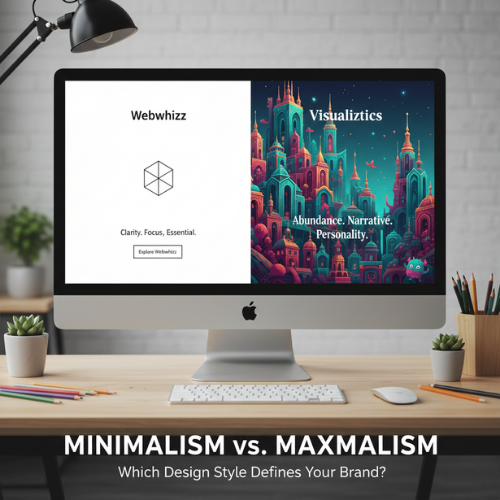
In the vast, noisy digital landscape, the visual identity of your brand is your primary handshake. Every element—from the font on your logo to the amount of whitespace on your homepage—sends a signal.
Two competing philosophies dominate the world of aesthetics and design, each offering a fundamentally different approach to communication: Minimalism and Maximalism.
But this isn't just about choosing furniture or paint colors. When translating these styles to your digital presence and brand identity, you are choosing a voice, a personality, and a user experience (UX) strategy.
Which philosophy is right for your brand? Let’s dive into the contrast and help you decide which side of the spectrum best serves your strategic goals.
The Core Philosophy: Defining the Styles
Before we apply these concepts to the digital realm, it’s crucial to understand the foundational definitions that govern these design movements.
1. Minimalism: The Doctrine of Essentialism
Minimalism is built on the principle of less is more. It is the intentional stripping away of non-essential elements to highlight the core purpose or message.
Core Tenets:
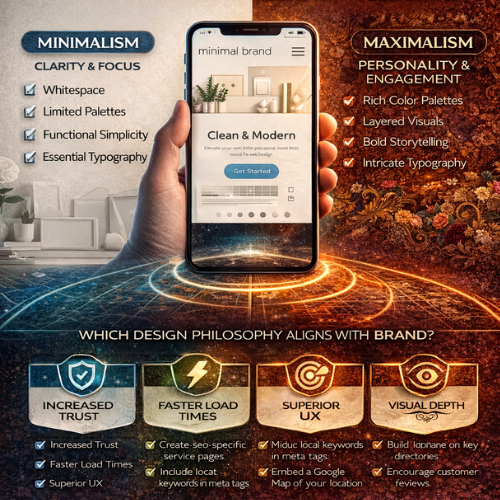
- Purity and Clarity: Focusing on essential forms, materials, or content.
- Whitespace: Utilizing negative space as a powerful design element.
- Functionality Over Decoration: Every element must serve a purpose.
- Limited Palettes: Often featuring monochrome, muted, or achromatic colors.
2. Maximalism: The Embrace of Abundance
Maximalism is the deliberate rejection of restraint. It is a philosophy that embraces rich complexity, layered texture, visual storytelling, and personality.
Core Tenets:
- Layering and Depth: Utilizing multiple textures, patterns, and colors simultaneously.
- Narrative Richness: Every object or design element contributes to a larger story.
- High Personality: Bold, often quirky, and highly memorable aesthetics.
- Visual Complexity: Embracing density, saturation, and intricate detail.
Digital Minimalism: Clarity and Focus
In web design and branding, minimalism is the gold standard for efficiency and clarity. Brands that thrive on trust, high conversion rates, and seamless mobile experience often lean heavily on this style.
The Aesthetic of Digital Minimalism:
- Vast Whitespace: Directs the user's eye instantly to the key call-to-action (CTA).
- Stripped-Down Navigation: Fewer links, often hidden behind a hamburger menu to maintain a clean interface.
- Monochromatic Photography: High-quality, impactful images that stand alone without heavy editing or borders.
- Strong Typography: Fonts are often sans-serif, acting as the primary visual element.
Key Brand Benefits of Digital Minimalism
| Benefit | Strategic Value | | :--- | :--- | | Increased Trust | The clean, organized nature suggests efficiency and professionalism (ideal for FinTech, SaaS, or luxury brands). | | Faster Load Times | Less content and fewer visual assets lead to superior site performance and better SEO rankings. | | Superior UX | By removing distractions, the user journey is simplified, leading to higher conversion rates and reduced cognitive load. | | Mobile-First Effectiveness | Minimalist designs translate flawlessly to small screens, maintaining speed and clarity. |
When Minimalism Can Fall Short
While effective, minimalism isn’t always the right fit. If your brand is highly creative, historical, or focused on community engagement, a pure minimalist approach can feel too sterile, cold, or generic. It can also make it difficult to convey a complex product offering quickly.
Digital Maximalism: Personality and Engagement
Digital maximalism is the antidote to bland conformity. It allows a brand to be unapologetically unique, memorable, and deeply engaging, prioritizing an immersive experience over pure transactional efficiency.
Think of sites that use rich, custom illustrations, dense scrolling narratives, unusual cursor animations, and retro or complex typefaces.
The Aesthetic of Digital Maximalism:
- Pattern Overload: Using distinct, repeating patterns in backgrounds and borders.
- Rich Color Palettes: Utilizing deep, saturated, or contrasting colors (think Neoclassical, Art Deco, or specific retro themes).
- Layered Visuals: Text superimposed over images, dynamic scrolling effects, and detailed iconography.
- Custom Typography: Using highly expressive, display fonts that reflect unique brand characteristics.
Key Brand Benefits of Digital Maximalism
| Benefit | Strategic Value | | :--- | :--- | | Unforgettable Memorability | Brands that embrace maximalism stand out immediately in a sea of simple, flat designs. | | Powerful Storytelling | Ideal for brands selling an experience or a lifestyle (e.g., hospitality, high fashion, unique cultural goods). | | Niche Appeal | Attracts a specific, highly engaged audience who appreciate complexity and detail. | | Visual Depth | Conveys history, tradition, or specific artistic sensibilities instantly. |
When Maximalism Can Be Detrimental
The main risks of maximalism are poor performance and overwhelming users. If design choices aren't intentional, maximalism devolves into clutter. A maximalist website requires expert optimization to avoid slow load times, confusing navigation, and accessibility issues.
Finding Your Brand Identity: The Webwhizz Integration
Choosing between these two powerful design philosophies is not a matter of personal taste; it's a strategic business decision. Your design choice must align with your target audience, your brand values, and the feeling you want to evoke.
To start charting your path, ask yourself these crucial questions:
Self-Reflection Questions for Brand Design
- What is our primary goal? (e.g., Conversion? Education? Entertainment?)
- What is our brand personality? (e.g., Serious and reliable? Playful and disruptive? Luxurious and reserved?)
- How mature is our audience? (Younger, digitally savvy users often tolerate more complexity; older audiences often prefer clarity.)
- How many steps does the user need to take? (E-commerce sites need fast, simple checkouts—leaning minimalist. Portfolio sites can afford rich visuals—leaning maximalist.)
- How much content do we need to display? (Data-heavy sites often require minimalist structure to organize information.)
About Us: The Strategic Guidance You Need
If you're struggling to decide whether a highly refined, efficient minimalist approach or a bold, narrative-driven maximalist style will best serve your brand’s growth, you need expert strategic consultation.
At Webwhizz, we understand that design isn't just about aesthetics; it's about strategy, performance, and user psychology. We specialize in translating your unique brand vision into a high-performing digital experience that maximizes ROI. We help you choose a design language—whether minimalist, maximalist, or a strategic hybrid—that speaks directly to your ideal customer.
Ready to translate these ideas into a high-performing website? Learn more about us and explore our comprehensive web development and branding services: webwhizzservices.com.
The Power of Intentional Design: A Hybrid Approach
It’s important to note that very few successful digital brands are 100% one style or the other. Modern design often employs a hybrid, or Intentional Design, approach.
An intentional approach borrows the best traits of both styles:
- Maximalist Personality on a Minimalist Skeleton: The site structure (navigation, layout) is clean and highly functional (minimalist), but the featured content areas (hero images, product pages) are rich, textured, and narrative-driven (maximalist).
- Visual Hierarchy: You can use minimalism to govern the essential elements (checkout pages, contact forms) where clarity is paramount, while allowing maximalism to dominate the less crucial, more experiential pages (blog, "About Us").
The goal is always to achieve a cohesive brand identity—a style where every choice, whether subtle or loud, reinforces your core message.
Conclusion
The battle between Minimalism and Maximalism is the battle between efficiency and expression.
If your brand values speed, ease of use, and professional trust, the uncluttered efficiency of Minimalism is likely your strongest tool. If your brand is defined by history, artistic complexity, or a desire to create a deeply memorable, immersive experience, Maximalism offers the canvas for your story.
Whichever path you choose, remember that great design is purposeful. It’s a foundational element of your business strategy, not just a coat of paint. Define your values first, and the design style will naturally follow.
Ready to build a website that aligns perfectly with your brand identity? Contact the experts at Webwhizz today.